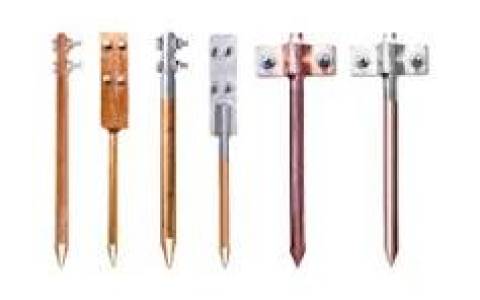
Here's a detailed product description for an earthing rod, formatted in Markdown:
Premium Copper-Bonded Earthing Rod
Ensure Uncompromising Electrical Safety and System Protection
Product Overview
The Earthing Rod (also known as a Grounding Rod) is a fundamental component of any robust electrical installation, designed to provide a safe and effective path for fault currents, lightning strikes, and static electricity to dissipate harmlessly into the earth. Our Premium Copper-Bonded Earthing Rod combines superior conductivity with exceptional durability, offering reliable long-term performance for a wide range of applications, from residential homes to critical industrial infrastructure.
Constructed from a high-tensile steel core molecularly bonded with a thick layer of electrolytic copper, this earthing rod delivers the optimal balance of strength for deep driving and excellent electrical conductivity, ensuring maximum safety and compliance with international standards.
Key Features
Superior Copper Bonding: Features a molecularly bonded layer of pure electrolytic copper (minimum 250 microns thick) over a high-tensile steel core, ensuring excellent conductivity and superior corrosion resistance compared to plain steel rods.
High Strength Steel Core: Engineered from high-tensile steel, designed to withstand the stress of deep driving into various soil types without bending or fracturing.
Corrosion Resistant: The thick copper layer provides robust protection against oxidation and electrochemical corrosion in aggressive soil environments, extending the operational life of the rod significantly.
Pointed Tip: Facilitates easy penetration into the ground, reducing installation effort and time.
Threaded Ends (Optional/Select Models): Available with precision-machined threaded ends for secure, seamless coupling of multiple rods, allowing for deeper grounding in areas with high soil resistivity.
Conforms to International Standards: Manufactured in compliance with relevant standards such as BS EN 50522, IEC 62305, and IEEE Std 80, ensuring reliability and acceptance in various regions.
Versatile Sizing: Available in a range of diameters and lengths to meet diverse grounding requirements and soil conditions.
Benefits
Enhanced Safety: Provides a low-resistance path for fault currents, significantly reducing the risk of electric shock and fire hazards to personnel and property.
Equipment Protection: Shields sensitive electrical and electronic equipment from damage caused by lightning strikes, power surges, and transient voltages.
System Stability: Improves the overall stability and performance of electrical systems by providing a reliable ground reference.
Long-Term Reliability: Exceptional corrosion resistance ensures a prolonged service life and consistent grounding performance, minimizing the need for frequent replacement.
Easy Installation: The pointed tip and robust construction simplify the driving process, even in challenging ground conditions. Threaded versions allow for flexible deep grounding.
Regulatory Compliance: Helps installations meet local and international electrical codes and safety regulations.
Renewable Energy: Solar panel installations (PV systems), wind turbines.
Telecommunications: Grounding antennas, communication towers, data centers.
Lightning Protection Systems: As part of a comprehensive lightning arrestor setup.
Electric Fences: Providing a reliable ground for agricultural fencing.
Substations & Power Distribution: Critical grounding for electrical infrastructure.
Installation Guidelines (General)
Site Selection: Choose a location with naturally moist soil, away from underground utilities (water, gas, sewer lines).
Driving: Use an appropriate driving head and a power hammer or heavy mallet to drive the rod vertically into the ground until only the top portion remains exposed.
Extension (if needed): For threaded rods, use a coupling dowel to connect additional rods for deeper penetration into high-resistivity soils.
Connection: Securely attach a suitable earthing clamp to the exposed end of the rod. Connect the earthing conductor (e.g., bare copper cable) from the clamp to your electrical system's main earthing terminal.
Testing: Always test the earth resistance after installation to ensure compliance with local electrical codes and safety standards.
IMPORTANT SAFETY DISCLAIMER: Installation of earthing rods and associated electrical work should only be performed by a qualified and certified electrician in strict adherence to all local and national electrical codes and regulations. Incorrect installation can lead to serious injury, death, and property damage. Consult relevant standards (e.g., NEC, BS 7671, AS/NZS 3000) before planning or commencing any work.