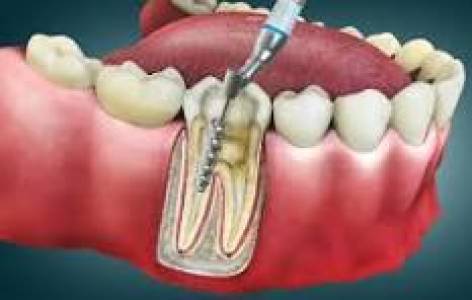

# Root Canal Therapy (Endodontic Treatment) --- **_Save Your Natural Tooth. Eliminate Pain. Restore Your Smile._** --- ### What is Root Canal Therapy? Root Canal Therapy, also known as Endodontic Treatment, is an advanced dental procedure designed to **alleviate pain, remove infection, and save a severely damaged or infected tooth** from extraction. It becomes necessary when the dental pulp – the soft tissue inside your tooth containing nerves, blood vessels, and connective tissue – becomes inflamed or infected due to deep decay, repeated dental procedures, cracks or chips in the tooth, or trauma. This critical procedure involves carefully removing the infected or inflamed pulp, cleaning and shaping the inside of the root canal system, and then filling and sealing the space to prevent further infection. Modern root canal treatments are highly effective and are typically performed with minimal discomfort, often comparable to a routine dental filling. --- ### When is Root Canal Therapy Needed? (Indications) You might require Root Canal Therapy if you experience: * **Persistent Tooth Pain:** Ranging from mild to severe, often throbbing, and continuous. * **Sensitivity to Hot and Cold:** Lingering sensitivity, especially after the hot or cold stimulus is removed. * **Swelling and Tenderness in the Gums:** Around the affected tooth. * **Pimple-like Bump on the Gums (Abscess):** Indicating an infection that has spread. * **Discoloration of the Tooth:** The affected tooth may darken. * **Pain When Chewing or Applying Pressure:** Indicating inflammation or infection. * **Deep Decay or Injury:** Visible damage extending to the pulp. --- ### Key Benefits of Root Canal Therapy * **Rapid and Effective Pain Relief:** The primary goal is to eliminate the severe pain caused by infection or inflammation. * **Preservation of Your Natural Tooth:** Avoids the need for extraction, maintaining your natural bite and smile. * **Prevention of Infection Spread:** Stops bacteria from spreading to other teeth, gums, or even into the bloodstream. * **Restoration of Chewing Function:** Allows you to continue eating your favorite foods without discomfort. * **Maintains Facial Aesthetics:** Preserving your natural tooth helps maintain the structure of your jaw and prevents sagging that can occur with tooth loss. * **Long-Term Solution:** With proper care, a restored tooth can last a lifetime. * **Cost-Effective in the Long Run:** Often less expensive than alternatives like tooth extraction followed by a bridge or dental implant. --- ### The Root Canal Process (Step-by-Step) 1. **Diagnosis:** We begin with a thorough examination, including X-rays, to confirm the need for treatment and assess the extent of the infection. 2. **Anesthesia:** Local anesthetic is administered to numb the affected tooth and surrounding area, ensuring a comfortable and pain-free procedure. 3. **Access Opening:** A small opening is made on the crown of the tooth to access the pulp chamber and root canals. 4. **Cleaning & Shaping:** Tiny instruments are used to carefully remove the infected pulp, bacteria, and debris from the canals. The canals are then cleaned, disinfected, and shaped to prepare them for filling. 5. **Filling & Sealing:** The cleaned and shaped canals are filled with a biocompatible, rubber-like material called gutta-percha, which is sealed in place with an adhesive cement to prevent re-infection. 6. **Restoration:** A temporary filling is placed to seal the access opening. In most cases, a dental crown or other permanent restoration is placed over the treated tooth at a subsequent appointment to protect it from fracture and restore its full function and appearance. --- ### Why Choose Root Canal Therapy Over Extraction? While extraction might seem like a quicker solution, saving your natural tooth through root canal therapy offers significant advantages: * **Maintains Natural Tooth Alignment:** Prevents adjacent teeth from shifting into the gap. * **Preserves Jawbone Density:** Tooth roots stimulate the jawbone, preventing bone loss that occurs after extraction. * **Natural Feel and Function:** Your own tooth is unparalleled in function, feel, and appearance. * **Avoids Complex Prosthetics:** Eliminates the need for bridges or implants to replace a missing tooth, which can be more involved and costly. --- ### Post-Treatment Care After your root canal procedure, it's important to: * **Avoid chewing on the treated tooth** until your permanent crown or restoration is placed. * **Maintain excellent oral hygiene** by brushing and flossing regularly. * **Attend follow-up appointments** as recommended to complete the final restoration. --- ### Frequently Asked Questions (FAQ) * **Is Root Canal Therapy painful?** * No. With modern anesthetics and techniques, the procedure itself is typically no more uncomfortable than having a filling. The root canal actually *relieves* the pain caused by the infection. * **How long does the procedure take?** * A single root canal can often be completed in one or two appointments, each lasting 60-90 minutes, depending on the complexity of the tooth. * **How successful is Root Canal Therapy?** * Root canal treatment has a very high success rate, often exceeding 95%. With proper care, a treated tooth can last a lifetime. * **Will I need a crown after a root canal?** * In most cases, yes. Root canal treated teeth can become more brittle, and a crown provides the necessary strength and protection against fracture, restoring full function. * **What are the alternatives to a root canal?** * The only alternative to root canal therapy for an infected tooth is extraction. If the tooth is extracted, it will need to be replaced with a bridge, implant, or partial denture to prevent further dental problems. --- ### Ready to Relieve Your Pain and Save Your Smile? Don't let tooth pain compromise your oral health. Contact us today to schedule a consultation and determine if Root Canal Therapy is the right solution for you. Our experienced team is dedicated to providing comfortable, effective, and compassionate care. --- **_Disclaimer:_** _This product description provides general information about Root Canal Therapy. Individual treatment plans and outcomes may vary. It is essential to consult with a qualified dental professional for a personalized diagnosis and treatment recommendation._