Dental Bridge vs. Dentures: Your Comprehensive Guide to Tooth Replacement
Missing teeth can significantly impact your oral health, ability to chew and speak, and even your self-confidence. Fortunately, modern dentistry offers several effective solutions. Two of the most common and traditional options are dental bridges and dentures. This detailed guide will break down the features, benefits, drawbacks, and ideal candidates for each, helping you understand which might be the best fit for your unique situation.
Understanding Dental Bridges
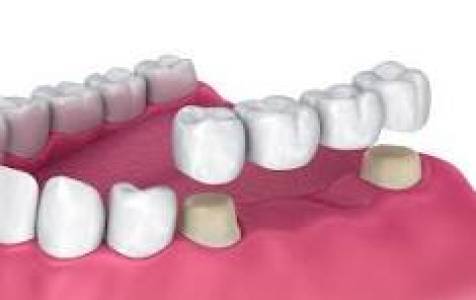
A dental bridge is a fixed prosthetic device used to replace one or more missing teeth by "bridging" the gap between two healthy teeth or dental implants. It consists of one or more artificial teeth (called pontics) anchored by dental crowns placed on the natural teeth (called abutment teeth) adjacent to the gap.
Key Features & Benefits (Pros)
Natural Look & Feel: Bridges are custom-made to match the color, shape, and size of your natural teeth, providing an aesthetically pleasing and often very natural feel.
Permanent Solution: Once cemented in place, a bridge is fixed and does not need to be removed daily, offering excellent stability and convenience.
Improved Chewing & Speech: Restores full chewing function and helps prevent speech impediments that can arise from missing teeth.
Prevents Shifting: Fills the gap, preventing surrounding teeth from drifting out of position, which can lead to bite problems and further tooth loss.
Distributes Bite Force: Helps distribute the force of your bite more evenly, protecting remaining natural teeth.
Durability: With proper care, dental bridges can last 5-15 years, and sometimes longer.
Considerations & Drawbacks (Cons)
Requires Alteration of Adjacent Teeth: For traditional bridges, the healthy abutment teeth on either side of the gap must be prepared (ground down) to accommodate the crowns, even if they are perfectly healthy.
Can Strain Abutment Teeth: The abutment teeth bear the full load of the bridge, which can put additional stress on them, potentially leading to future issues.
Maintenance Under Pontic: Requires diligent cleaning underneath the pontic (artificial tooth) to prevent plaque buildup and gum disease in that area.
Not Suitable for All Cases: Not ideal for very large gaps or if the adjacent teeth are not strong enough to support the bridge.
Cost: Generally more expensive than traditional partial dentures due to the materials and laboratory work involved.
Bone Preservation: Does not stimulate the jawbone beneath the missing tooth, which can lead to some bone loss over time in the area of the pontic. (Implant-supported bridges do preserve bone).
Types of Dental Bridges
Traditional Bridge: The most common type, involving crowns on adjacent teeth.
Cantilever Bridge: Used when there's only one adjacent natural tooth to support the bridge. Less common due to potential for leverage issues.
Maryland Bonded Bridge (Resin-Bonded Bridge): Uses metal or porcelain wings bonded to the inside surface of adjacent teeth, requiring minimal tooth preparation. Less strong than traditional bridges.
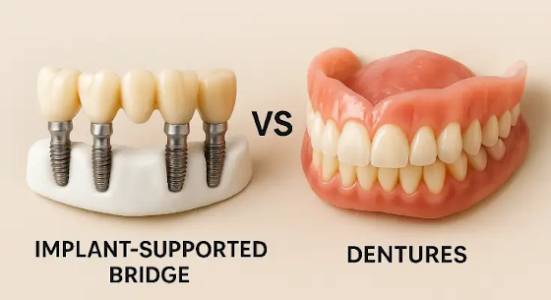
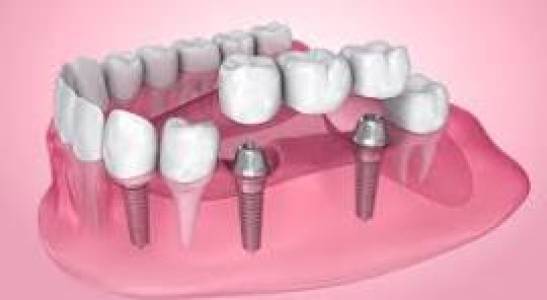
Implant-Supported Bridge: Uses dental implants as abutments rather than natural teeth, preserving natural tooth structure and offering excellent bone stimulation.
Ideal Candidate for a Dental Bridge
Individuals with one or a few consecutive missing teeth.
Those with strong, healthy adjacent teeth (for traditional bridges).
People seeking a fixed, permanent solution.
Those who prioritize a natural look and feel.
Individuals committed to excellent oral hygiene.
Understanding Dentures
Dentures are removable appliances used to replace multiple missing teeth or an entire arch of teeth. They typically consist of artificial teeth set in a gum-colored acrylic base, designed to rest on your gums.
Key Features & Benefits (Pros)
Cost-Effective: Generally a more affordable option compared to bridges or implants, especially when replacing many teeth.
Non-Invasive for Remaining Teeth: Traditional dentures do not require any preparation or alteration of existing natural teeth.
Replaces Multiple or All Teeth: Can replace a few teeth (partial dentures) or an entire arch (complete dentures).
Removable for Cleaning: Can be easily removed for thorough cleaning and maintenance.
Quick Solution: The process for getting dentures can often be faster than for fixed options.
Considerations & Drawbacks (Cons)
Potential for Instability: Traditional dentures rely on suction, clasps, or natural ridges for retention, which can lead to movement, slipping, or discomfort, especially when eating or speaking.
Can Affect Speech & Eating Initially: Patients often need an adjustment period to get used to speaking and eating with dentures.
Require Adjustment/Relines: The fit of dentures can change over time as the jawbone naturally reshapes. Relining or rebasing is often necessary.
Risk of Bone Resorption: Complete dentures do not stimulate the jawbone, leading to accelerated bone loss (resorption) over time. This changes facial structure and makes dentures fit poorly.
May Not Feel as Natural: While improved, dentures may never feel as natural or secure as natural teeth or fixed restorations.
Daily Removal & Cleaning: Requires daily removal for cleaning to prevent oral health issues.
Potential for Oral Sore Spots: Ill-fitting dentures can cause sore spots, particularly in the initial wearing phase.
Types of Dentures
Complete (Full) Dentures: Replace all teeth in an entire arch (upper, lower, or both).
Conventional: Made after all remaining teeth are removed and tissues have healed (can take several months).
Immediate: Inserted immediately after teeth are extracted; often require relining as gums heal.
Partial Dentures: Replace one or more missing teeth when some natural teeth remain. They typically clasp onto existing teeth for support.
Implant-Supported Dentures (Overdentures): Utilize a few strategically placed dental implants to provide much greater stability and retention for a removable denture. This significantly improves comfort and function and helps preserve bone.
Ideal Candidate for Dentures
Individuals missing many or all teeth in an arch.
Those seeking a more affordable initial tooth replacement option.
People who prefer a removable appliance.
Candidates who may not be suitable for bridges or implants due to health conditions, bone density, or budget constraints.
Dental Bridge vs. Dentures: Side-by-Side Comparison
Feature
Dental Bridge
Dentures
Type
Fixed (cemented in place)
Removable
Primary Use
1-3 consecutive missing teeth
Multiple missing teeth or an entire arch
Impact on Adjacent Teeth
Requires alteration (grinding) for traditional bridges
No alteration to remaining teeth (for traditional dentures)
Stability/Security
Very stable, feels like natural teeth
Can be unstable, may slip, especially traditional full dentures
Bone Preservation
No direct stimulation under pontic (except implant-supported)
No direct stimulation of jawbone, leading to bone loss over time
Maintenance
Brush and floss normally, use floss threader under pontic
Removed daily for cleaning; requires special denture cleaners
Comfort
High comfort, very natural feel
Adjustment period, can cause sore spots, less natural feel
Lifespan
5-15+ years (with proper care)
5-10 years (base often needs relining/replacement sooner)
Cost (Initial)
Moderate to High (per unit)
Lower (especially traditional full or partial dentures)
Speech & Eating
Excellent restoration, natural
Adjustment period, can affect speech/eating initially
Making Your Informed Choice: Key Factors to Consider
Deciding between a dental bridge and dentures is a highly personal decision that should be made in consultation with your dentist. Here are the critical factors they will discuss with you:
Number and Location of Missing Teeth: This is often the primary determining factor.
Overall Oral Health: The health of your remaining teeth, gums, and jawbone is crucial.
Adjacent Teeth Condition: For bridges, the strength and health of abutment teeth are vital.
Jawbone Density: Important for implant-supported options and how well dentures will fit.
Budget: Costs vary significantly, and insurance coverage can play a role.
Lifestyle & Preferences: Do you prefer a fixed or removable solution? How important is a natural feel?
Long-Term Goals: Are you looking for a temporary solution or a long-term investment in your oral health?
Commitment to Oral Hygiene: Both options require diligent care, but the specific routines differ.
Conclusion
Both dental bridges and dentures are valuable solutions for replacing missing teeth, each with distinct advantages and disadvantages.
Dental bridges offer a fixed, stable, and natural-feeling solution, ideal for those missing one or a few teeth with healthy adjacent teeth.
Dentures provide a more affordable and non-invasive option for replacing multiple or all teeth, especially for those who prefer a removable appliance.
Ultimately, the best choice for you will depend on your individual circumstances, oral health needs, aesthetic goals, and financial considerations. We strongly recommend scheduling a comprehensive consultation with your dentist to discuss these options in detail and determine the most suitable treatment plan for restoring your smile and oral health.
Disclaimer: This information is for educational purposes only and does not constitute medical advice. Always consult with a qualified dental professional for diagnosis and treatment recommendations regarding your specific oral health needs.