Description
Dental Restorations (Tooth Fillings)
Restore Your Smile & Oral Health with Durable Dental Restorations
Are you experiencing tooth sensitivity, discomfort when chewing, or visible signs of decay? Dental restorations, commonly known as tooth fillings, are a fundamental solution to repair teeth damaged by decay, cracks, or fractures. At [Your Clinic Name], we offer a range of high-quality dental restoration options designed to bring back the strength, function, and natural beauty of your smile.
What Are Dental Restorations?
Dental restorations are treatments used to repair and restore the structure and function of a tooth that has been compromised by cavities (tooth decay), minor chips, cracks, or wear. By carefully removing the damaged portion of the tooth and filling the void with a suitable material, we can prevent further decay, alleviate pain, and restore your ability to chew and speak comfortably.
Key Benefits of Dental Restorations:
- Eliminate Discomfort: Stops pain and sensitivity caused by decay reaching the inner layers of the tooth.
- Prevent Further Damage: Removes decay before it can spread, potentially leading to more severe issues like infection or tooth loss.
- Restore Chewing Efficiency: Rebuilds the tooth's structure, allowing you to bite and chew properly without pain.
- Enhance Natural Aesthetics: Tooth-colored options seamlessly blend with your natural teeth, improving the overall appearance of your smile.
- Improve Oral Health: Contributes to a healthier mouth by addressing compromised teeth and preventing bacterial spread.
- Prolong Tooth Lifespan: Protects and strengthens weakened teeth, extending their functional life.
Types of Dental Restorations We Offer:
We provide a variety of filling materials, each with unique characteristics, advantages, and ideal applications. Our dentists will discuss the best option for your specific needs, considering factors like the location of the filling, durability requirements, aesthetic preferences, and budget.
1. Composite Resins (Tooth-Colored Fillings)
- Description: Made from a mixture of plastic and fine glass particles, composite resins are the most popular choice for their ability to blend seamlessly with your natural tooth color. They are bonded directly to the tooth structure.
- Ideal For: Front teeth, visible areas, smaller to medium-sized cavities, and patients seeking a discreet restoration.
- Advantages:
- Aesthetic Appeal: Matches your tooth shade for an invisible restoration.
- Conservative: Requires less removal of healthy tooth structure compared to amalgam.
- Versatile: Can be used to repair chips, cracks, and change the shape or color of teeth.
- Bonding: Chemically bonds to the tooth, providing support to the remaining tooth structure.
- Considerations:
- May be less durable than amalgam for very large restorations in high-stress areas.
- Can sometimes stain over time, similar to natural teeth.
- More technique-sensitive to place, potentially taking slightly longer.
2. Dental Amalgam (Silver Fillings)
- Description: A durable and time-tested restoration material made from a blend of metals, including silver, tin, copper, and mercury. Amalgam has been safely used in dentistry for over 150 years.
- Ideal For: Back teeth (molars) that endure heavy chewing forces, large cavities, and situations where moisture control is challenging.
- Advantages:
- Exceptional Durability: Very strong and long-lasting, often lasting 10-15 years or more.
- Cost-Effective: Generally more affordable than composite or other restoration types.
- Moisture Tolerant: Easier to place in areas where keeping the tooth completely dry is difficult.
- Strong: Can withstand significant chewing pressure.
- Considerations:
- Metallic Appearance: The silver color is not aesthetically pleasing, especially in visible areas.
- Requires More Tooth Preparation: A slightly larger amount of healthy tooth structure must sometimes be removed to create the necessary shape for the amalgam to hold.
- Thermal Sensitivity: May experience temporary sensitivity to hot or cold after placement.
3. Glass Ionomer Cements
- Description: Made from a mixture of acrylic and fluoroaluminosilicate glass, these fillings bond chemically to the tooth and release fluoride, which can help prevent further decay.
- Ideal For: Small cavities, non-load-bearing areas (like around the gum line), temporary fillings, and for children's primary (baby) teeth.
- Advantages:
- Fluoride Release: Helps protect the tooth from further decay.
- Good Biocompatibility: Gentle on soft tissues.
- Minimal Tooth Preparation: Less drilling is often required.
- Can be placed in moist environments.
- Considerations:
- Weaker than composite or amalgam; not recommended for chewing surfaces of adult teeth.
- Less aesthetic than composite, although some newer versions offer improved translucency.
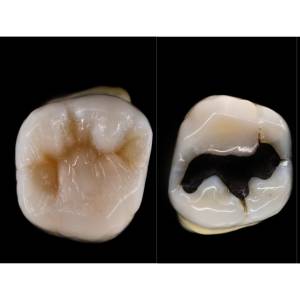
4. Porcelain/Ceramic (Inlays & Onlays)
- Description: While technically not "fillings" in the traditional sense, inlays and onlays are custom-made restorations (often fabricated in a dental lab) from high-strength porcelain or ceramic. An inlay fills the space between the cusps of a tooth, while an onlay covers one or more cusps.
- Ideal For: Large cavities, cracked teeth, or situations where a filling would be too weak but a full crown isn't yet necessary.
- Advantages:
- Superior Aesthetics: Mimics natural tooth enamel in appearance and translucency.
- Excellent Durability: Stronger and more resistant to fracture than composite fillings for larger restorations.
- Precise Fit: Custom-fabricated for an exact fit, reducing the risk of bacterial leakage.
- Conservative: Preserves more healthy tooth structure than a full crown.
- Considerations:
- Higher cost than direct fillings.
- Typically requires two appointments (one for preparation and impression, one for placement).
- Can be brittle if not properly supported.
5. Gold (Inlays & Onlays)
- Description: Custom-crafted from gold alloy, these restorations are known for their exceptional strength and longevity. Like porcelain inlays/onlays, they are fabricated in a lab.
- Ideal For: Patients prioritizing maximum durability and biocompatibility, particularly for molars, and those who don't mind the gold appearance.
- Advantages:
- Ultimate Durability: Extremely long-lasting, often outliving the patient's natural tooth.
- Excellent Biocompatibility: Very gentle on opposing teeth and soft tissues.
- Precise Fit: Custom-made for superior marginal integrity.
- Strength: Highly resistant to fracture and wear.
- Considerations:
- Highest cost among all restoration options.
- Metallic appearance is not aesthetic for many patients.
- Requires two appointments.
The Dental Restoration Process:
The procedure for a dental restoration is typically straightforward and completed in a single visit for direct fillings (composite, amalgam, glass ionomer), or two visits for indirect restorations (inlays, onlays).
- Diagnosis & Planning: Our dentist will examine your tooth, often using X-rays, to assess the extent of the decay or damage and discuss the best material options.
- Anesthesia: The area around the affected tooth is gently numbed with local anesthetic to ensure a comfortable experience.
- Decay Removal: The decayed or damaged tooth material is carefully removed using specialized dental instruments.
- Tooth Preparation: The remaining tooth structure is shaped to ensure the filling material adheres properly and securely.
- Filling Placement:
- Composite: A bonding agent is applied, and the composite resin is placed in layers, hardened with a special light, and then shaped.
- Amalgam/Glass Ionomer: The material is mixed and placed directly into the prepared cavity, then shaped.
- Inlays/Onlays: An impression is taken, a temporary restoration is placed, and you return for a second visit when the custom restoration is bonded into place.
- Shaping & Polishing: The restoration is carefully shaped to fit your bite and polished for a smooth, natural finish.
- Bite Check: Your bite is checked to ensure proper occlusion and comfort.
Maintaining Your Restoration:
With proper care, your dental restoration can last for many years:
- Excellent Oral Hygiene: Brush twice daily and floss daily to prevent new decay around the filling.
- Regular Dental Check-ups: Visit [Your Clinic Name] for routine exams and cleanings, allowing us to monitor the condition of your fillings.
- Avoid Hard Foods: Be mindful when chewing hard candies, ice, or other extremely hard foods that could damage your filling or natural tooth structure.
- Address Clenching/Grinding: If you clench or grind your teeth (bruxism), ask us about a nightguard to protect your restorations and natural teeth.
Ready to Restore Your Smile?
Don't let dental discomfort or decay compromise your oral health. Contact [Your Clinic Name] today to schedule a consultation. Our compassionate team will assess your needs and guide you toward the best dental restoration solution to restore the health, strength, and beauty of your smile.
Call us at [Phone Number] or visit our website at [Website Address] to book your appointment.
Disclaimer: The information provided is for general educational purposes only and should not be considered medical advice. Always consult with a qualified dental professional for diagnosis and treatment recommendations tailored to your individual needs.