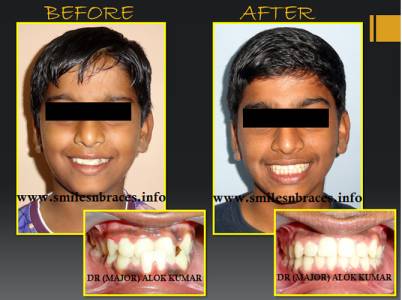
Description
Here's a detailed product description for a Skeletal Class III orthodontic treatment, presented in Markdown format.
Skeletal Class III Correction: A Comprehensive Two-Phase Approach with Orthopaedic Appliances & Fixed Orthodontics
Product Overview
This "product" describes a highly effective and predictable treatment protocol for patients presenting with Skeletal Class III malocclusion, a challenging condition characterized by an underbite or "lantern jaw" appearance due to a retrusive maxilla, protrusive mandible, or a combination of both. This comprehensive approach leverages the power of early intervention with orthopaedic appliances to modify growth, followed by precise fixed orthodontic treatment to achieve ideal dental alignment and functional occlusion.
Designed for growing patients, this two-phase strategy aims to improve facial aesthetics, enhance oral function, and often mitigate the need for orthognathic surgery in adulthood. It represents a commitment to achieving stable, long-lasting results through a scientifically proven, sequential methodology.
Key Features & Treatment Phases
Phase 1: Orthopaedic Growth Modification
This initial phase focuses on influencing skeletal growth during a critical developmental window, typically in early to mid-adolescence.
- Goal: To correct the underlying skeletal discrepancy by promoting maxillary growth and/or restricting mandibular growth.
- Target Conditions: Maxillary retrusion, mild to moderate mandibular prognathism.
- Typical Appliances Used:
- Facemask Therapy (Reverse-Pull Headgear): Combined with a palatal expander (e.g., RME) to protract the maxilla forward and outward, improving its position relative to the cranial base and mandible.
- Chin Cap/Headgear: Used to restrict or redirect mandibular growth, particularly in cases with a tendency towards excessive lower jaw development.
- Functional Appliances: In some cases, specific functional appliances may be used to guide jaw growth.
- Mechanism: Applies forces to modify the growth patterns of the maxilla and/or mandible, aiming to normalize the skeletal relationship.
- Duration: Typically 9-18 months, depending on patient compliance and severity of the discrepancy.
- Outcome: Significant improvement in the ANB angle, Wits appraisal, and overall facial profile by reducing the skeletal Class III tendency.
Phase 2: Fixed Orthodontic Finishing
Following successful orthopaedic correction and typically after the eruption of permanent teeth, fixed appliances are used to meticulously align the teeth and refine the occlusion.
- Goal: Achieve precise dental alignment, ideal intercuspation, correct individual tooth positions, and ensure long-term stability.
- Appliances Used:
- Brackets: High-quality metal, ceramic, or self-ligating brackets are bonded to individual teeth.
- Archwires: Progressively stiffer archwires are used to move teeth into their desired positions.
- Elastics (Rubber Bands): Used for inter-arch correction and fine-tuning of the bite.
- Ancillary Appliances: Springs, coils, or other adjuncts may be utilized for specific tooth movements.
- Mechanism: Applies controlled forces to move teeth, correcting crowding, spacing, rotations, and achieving ideal overjet/overbite.
- Duration: Typically 18-30 months, varying by case complexity and patient compliance.
- Outcome: A beautifully aligned smile, stable Class I molar and canine relationship, optimal functional occlusion, and enhanced aesthetic harmony.
Benefits of This Approach
For the Patient:
- Improved Facial Aesthetics: Significant positive impact on facial profile, reducing the prominence of the lower jaw and enhancing harmony.
- Reduced Need for Surgery: Often avoids or minimizes the need for complex and invasive orthognathic surgery in adulthood.
- Enhanced Oral Function: Improves chewing efficiency, speech articulation, and overall oral health.
- Long-Term Stability: Early skeletal correction often leads to more stable dental results.
- Increased Self-Confidence: A beautiful, functional smile contributes significantly to psychological well-being.
- Healthier Jaw Joints: Promotes healthier temporomandibular joint (TMJ) function by establishing a balanced bite.
For the Clinician/Practice:
- Predictable Outcomes: A well-established protocol with predictable results when initiated at the appropriate time.
- Demonstrates Expertise: Showcases proficiency in managing complex skeletal discrepancies.
- High Patient Satisfaction: Patients and parents are often highly satisfied with the transformative results.
- Leverages Growth Potential: Utilizes the patient's natural growth spurt for maximum skeletal correction.
Ideal Candidates
This treatment protocol is specifically designed for:
- Growing patients (typically ages 8-14) diagnosed with skeletal Class III malocclusion.
- Patients exhibiting a combination of maxillary retrusion and/or mild-to-moderate mandibular prognathism.
- Individuals with good patient and parental compliance, as successful orthopaedic treatment heavily relies on consistent appliance wear.
Why Choose This Two-Phase Approach?
This sequential approach offers distinct advantages over single-phase treatment or delaying intervention:
- Optimizes Growth: Capitalizes on the patient's active growth period to make fundamental skeletal changes that are often difficult or impossible to achieve once growth is complete.
- Minimally Invasive: Offers a non-surgical pathway to correct significant skeletal discrepancies for many patients.
- Comprehensive Correction: Addresses both the underlying skeletal problem and the resulting dental misalignment for a truly holistic and stable outcome.
- Foundation for Stability: Establishing a correct skeletal base in Phase 1 provides a more stable foundation for the dental corrections made in Phase 2.
Disclaimer: The actual treatment plan, appliances used, and duration will vary based on individual patient diagnosis, severity of malocclusion, growth potential, and patient compliance. A thorough clinical examination, diagnostic records (X-rays, photos, models), and consultation with a qualified orthodontist are essential to determine the most appropriate course of treatment.