Description
Root Canal Therapy: Restore Your Smile, Relieve Your Pain
Suffering from persistent tooth pain, sensitivity, or swelling? Don't let an infected tooth compromise your oral health or quality of life. Root canal therapy, a highly effective and common dental procedure, offers a lasting solution to eliminate pain, clear infection, and save your natural tooth.
What is Root Canal Therapy?
Root canal therapy, also known as endodontic treatment, is a specialized procedure designed to remove infected or damaged tissue (pulp) from inside a tooth. The pulp contains nerves, blood vessels, and connective tissue, and when it becomes inflamed or infected due to deep decay, cracks, or trauma, it can cause severe pain and lead to abscesses.
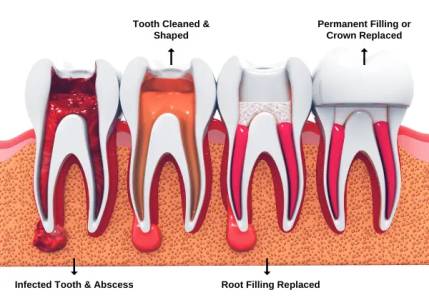
During the procedure, the infected pulp is carefully removed, the inside of the tooth is cleaned and disinfected, and then it's filled and sealed to prevent future infection. The ultimate goal is to preserve your natural tooth, which is always the best option for maintaining your bite, chewing function, and aesthetic appearance.
Key Benefits of Choosing Root Canal Therapy:
- Effective Pain Relief: Immediately alleviates the intense pain caused by infection and inflammation.
- Saves Your Natural Tooth: Prevents the need for extraction, preserving your natural smile and bite.
- Prevents Further Infection: Eliminates bacteria and seals the tooth to stop the spread of infection to other teeth or your jawbone.
- Maintains Oral Health: Keeps your natural tooth in place, preventing shifting of adjacent teeth, and maintaining the integrity of your jawbone.
- Long-Term Solution: With proper care and a final restoration (like a crown), a treated tooth can last a lifetime.
- Cost-Effective: Often more economical in the long run than extracting a tooth and replacing it with an implant or bridge.
- Improved Chewing & Speech: Maintains your natural chewing efficiency and clear speech patterns.
When is a Root Canal Needed? (Indications)
You might need a root canal if you experience any of the following symptoms:
- Severe Toothache: Especially a persistent, throbbing pain that can radiate to your jaw, ear, or head.
- Prolonged Sensitivity: Lingering pain to hot or cold temperatures, even after the source is removed.
- Swelling & Tenderness: In the gums near the affected tooth, or swelling in the face or neck.
- Pimple-Like Bump on Gums: A "fistula" or abscess that may periodically release pus.
- Tooth Discoloration: Darkening of the tooth, indicating nerve damage.
- Pain Upon Chewing or Pressure: Discomfort when biting down.
- Deep Decay: An X-ray might show decay reaching the pulp chamber.
- Trauma: A chip or crack in the tooth that exposes the pulp.
The Root Canal Process: What to Expect
Root canal therapy is typically performed in one or two appointments and is often no more uncomfortable than getting a filling, thanks to modern anesthetics and techniques.
- Diagnosis & Planning: We'll conduct a thorough examination, including X-rays, to assess the extent of the infection and plan your treatment.
- Anesthesia: Local anesthetic will be administered to numb the affected tooth and surrounding area, ensuring a pain-free procedure.
- Isolation: A small sheet of latex or non-latex material called a "rubber dam" is placed around the tooth to keep it dry and free from saliva during treatment.
- Access Opening: A small opening is made through the crown of the tooth to access the pulp chamber and root canals.
- Pulp Removal & Cleaning: Tiny instruments are used to meticulously remove the infected and damaged pulp tissue. The inside of the tooth is then thoroughly cleaned, disinfected, and shaped.
- Filling & Sealing: The cleaned root canals are filled with a biocompatible, rubber-like material called gutta-percha, which is sealed with an adhesive cement to prevent reinfection.
- Temporary Restoration: A temporary filling is placed to seal the access opening until your permanent restoration.
- Final Restoration: In most cases, a dental crown is recommended after a root canal to protect the treated tooth from fracture and restore its full function and appearance. This usually occurs during a separate visit.
Recovery & Aftercare
It's normal to experience some mild discomfort or sensitivity for a few days after the procedure, especially when chewing. This can typically be managed with over-the-counter pain relievers.
- Avoid Chewing: Refrain from chewing on the treated tooth until your permanent crown or filling is placed.
- Oral Hygiene: Maintain excellent oral hygiene, including brushing and flossing daily.
- Medication: Follow any prescribed medication instructions (antibiotics, pain relievers).
- Follow-Up: Attend your follow-up appointment for the final restoration.
With proper care, your treated tooth can function normally for many years, helping you maintain a healthy, confident smile.
Why Choose Us for Your Root Canal Therapy?
- Experienced & Gentle Care: Our skilled dentists and endodontists utilize advanced techniques to ensure a comfortable and effective procedure.
- State-of-the-Art Technology: We employ modern diagnostic tools and treatment equipment (e.g., digital X-rays, rotary instruments, dental microscopes) for precise and efficient treatment.
- Patient-Centered Approach: Your comfort and well-being are our top priorities. We take the time to explain every step and address any concerns you may have.
- Comprehensive Solutions: From initial diagnosis to the final protective crown, we provide complete care for your root canal needs.
- Commitment to Preservation: Our primary goal is always to save your natural tooth and help you achieve lasting oral health.
Don't let tooth pain dictate your life. If you suspect you may need a root canal, contact us today to schedule a consultation. We're here to help you find relief and restore your healthy smile.
[Your Practice Name] [Your Practice Address] [Your Practice Phone Number] [Your Practice Website]
Disclaimer: This product description is for informational purposes only and does not constitute medical advice. A proper diagnosis and treatment plan can only be made by a qualified dental professional after an examination. Individual results may vary.