Description
The Advanced Self-Ligation Technique: Revolutionizing Orthodontics for Enhanced Efficiency & Patient Comfort
Unlock a New Era of Orthodontic Excellence
Step into the future of smile design with the Self-Ligation Technique – an innovative approach that redefines the orthodontic experience for both practitioners and patients. Moving beyond traditional ligatures, self-ligating systems leverage advanced bracket designs with integrated, passive or active mechanisms to secure the archwire, promising a smoother, more efficient, and often more comfortable journey to a perfect smile.
Designed for the modern orthodontic practice, this technique offers a sophisticated solution to traditional challenges, allowing you to provide exceptional care with unparalleled efficacy.
Key Features & Unparalleled Benefits
The Self-Ligation Technique, through its cutting-edge bracket systems, delivers a host of advantages:
1. Reduced Frictional Resistance
- Feature: Eliminates the need for elastic or metal ligatures to hold the archwire in place. Instead, a sophisticated, built-in clip or door mechanism secures the wire.
- Benefit: Significantly lowers the friction between the archwire and the bracket slot. This allows teeth to move more freely and efficiently along the archwire, promoting smoother biological tooth movement with lighter forces.
2. Enhanced Treatment Efficiency
- Feature: Smoother wire mechanics and precise force delivery.
- Benefit:
- Potentially Shorter Treatment Times: Reduced friction can translate to more rapid tooth movement, potentially shortening overall treatment duration for many patients.
- Fewer, Shorter Appointments: Wire changes are typically faster as there's no need to remove and replace individual ligatures. This saves valuable chair time and reduces the frequency of patient visits.
3. Superior Patient Comfort
- Feature: Application of lighter, continuous forces. Often designed with smoother, lower-profile bracket edges.
- Benefit:
- Less Discomfort: Patients often report less initial discomfort and fewer painful adjustments compared to traditional braces, thanks to the gentler forces.
- Reduced Irritation: The absence of elastics minimizes the potential for friction and irritation to the oral tissues.
4. Improved Oral Hygiene
- Feature: No elastic ligatures to trap food particles and plaque. Simpler, often smoother bracket designs.
- Benefit:
- Easier Cleaning: Patients find it significantly easier to clean around the brackets, reducing the risk of plaque accumulation, gingivitis, and decalcification during treatment.
- Healthier Gums: A cleaner oral environment contributes to healthier gum tissue throughout the orthodontic process.
5. Predictable & Precise Mechanics
- Feature: Consistent force application over time, especially with passive self-ligation systems.
- Benefit: Provides orthodontists with a higher degree of control and predictability in tooth movement, leading to more consistent and desirable clinical outcomes. Active self-ligating systems offer precise engagement and torque control when desired.
6. Streamlined Practice Operations
- Feature: Quick and easy wire insertion and removal.
- Benefit:
- Increased Productivity: Shorter appointment times allow practices to manage more patients daily, optimizing scheduling and increasing practice capacity.
- Reduced Strain: Simplifies the adjustment process for clinical staff, enhancing workflow efficiency.
How the Self-Ligation Technique Works
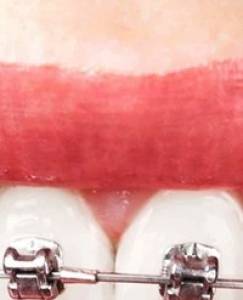
The core of the self-ligation technique lies in its specialized brackets. Unlike conventional brackets that require an external elastic band or thin wire to hold the archwire, self-ligating brackets feature a small, integrated "door" or "clip."
When the archwire is placed into the bracket slot, this door is closed, securely holding the wire in place. This mechanism can be:
- Passive Self-Ligation: The door simply closes over the wire, allowing it to move freely within the bracket slot with minimal friction. This is ideal for initial leveling and aligning phases, promoting rapid tooth movement.
- Active Self-Ligation: The door or clip actively presses on the archwire, engaging it more directly within the bracket slot. This can provide greater torque and rotation control, particularly useful in later stages of treatment.
The absence of external ligatures means the system is less prone to degradation, maintains consistent forces, and provides a cleaner aesthetic.
Who Can Benefit from Self-Ligation?
For Orthodontic Professionals:
- Those seeking to enhance clinical efficiency and reduce chair time.
- Practitioners committed to offering patients the most advanced and comfortable treatment options.
- Clinicians aiming for greater predictability and control in complex tooth movements.
- Practices looking to differentiate themselves with cutting-edge technology and superior patient experience.
For Patients:
- Individuals seeking a potentially faster orthodontic journey.
- Those concerned about comfort and wanting to minimize discomfort during treatment.
- Patients prioritizing oral hygiene and ease of cleaning their braces.
- Anyone looking for a modern, often more discreet, orthodontic appliance.
Why Invest in the Self-Ligation Technique?
Embracing the Self-Ligation Technique means investing in a methodology that brings tangible improvements to your practice and superior outcomes for your patients. It's about delivering precision, comfort, and efficiency, setting a new standard for orthodontic care.
Join the growing number of practitioners who are transforming smiles with the power of self-ligation, proving that advanced mechanics can lead to simplified and highly effective treatment.
Important Considerations
While the Self-Ligation Technique offers numerous benefits, it's crucial to remember that the success of any orthodontic treatment ultimately depends on the skill and expertise of the treating orthodontist. Proper diagnosis, treatment planning, and patient compliance remain paramount. A variety of self-ligating systems are available, each with its unique design and benefits, allowing practitioners to choose the best fit for their philosophy and patient needs.
Take the Next Step
Ready to explore how the Self-Ligation Technique can elevate your practice?