Description
Advanced Fire Suppression Systems: Safeguarding Your Assets & Business Continuity
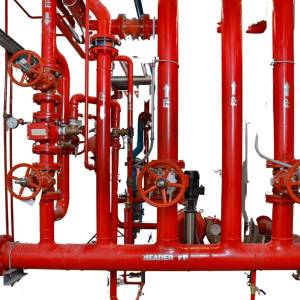
Protecting critical infrastructure, invaluable assets, and human life from the devastating impact of fire is paramount for any organization. Our state-of-the-art Fire Suppression Systems offer a rapid, reliable, and environmentally responsible solution to detect, contain, and extinguish fires before they escalate, minimizing damage and ensuring business continuity.
What is a Fire Suppression System?
Unlike traditional sprinkler systems designed primarily to control fires, a fire suppression system is engineered for active fire extinguishment. Utilizing advanced detection and intelligent control, these systems deploy specialized agents – such as clean agents, inert gases, or wet/dry chemicals – tailored to the specific environment and potential fire hazards. The goal is to suppress a fire quickly and effectively, often before significant damage occurs, and critically, without causing secondary damage that water-based systems might.
Key Features & Technologies
Our Fire Suppression Systems incorporate the latest advancements in fire safety technology to provide superior protection:
Advanced Fire Detection
- Early Warning Capabilities: Employing highly sensitive sensors for the earliest possible fire detection.
- Multi-Spectrum Detection: Combination of smoke, heat, and flame detectors.
- Aspirating Smoke Detection (ASD/VESDA): Ultra-sensitive systems that draw air samples for the earliest detection of incipient fires, ideal for critical environments.
Intelligent Control Panels
- Centralized Monitoring: State-of-the-art control units for comprehensive system oversight.
- Programmable Logic: Customizable response protocols tailored to your facility's unique needs.
- Remote Access & Integration: Seamless integration with Building Management Systems (BMS), security systems, and existing fire alarm networks.
Rapid Agent Deployment
- Swift Actuation: Engineered for immediate discharge upon confirmed fire detection, minimizing fire growth.
- Optimized Distribution: Precisely designed nozzle arrays ensure uniform agent dispersion for maximum effectiveness.
- Prevent Re-ignition: Agents are designed to remove heat, oxygen, or inhibit the chemical reaction of fire, preventing its recurrence.
Environmentally Responsible Suppression Agents
- Clean Agents (e.g., FM-200™, Novec™ 1230):
- Non-toxic and safe for occupied spaces.
- Electrically non-conductive, safe for sensitive electronics.
- Zero Ozone Depletion Potential (ODP) and low Global Warming Potential (GWP).
- Leaves no residue, eliminating clean-up and secondary damage.
- Inert Gas Systems (e.g., Argonite®, ProInert™):
- Composed of naturally occurring gases (e.g., Argon, Nitrogen).
- Safe for human exposure (at appropriate concentrations).
- Excellent for critical assets, leaving no residue.
- CO2 Systems:
- Extremely effective for specific industrial hazards and unmanned areas.
- High toxicity requires strict safety protocols for human presence.
- Wet & Dry Chemical Systems:
- Specialized for commercial kitchens (wet chemical) and industrial hazards (dry chemical).
- Highly effective on specific fire classes (e.g., Class K for cooking oils, Class B/C for flammable liquids/gases).
Modular & Scalable Design
- Customizable to fit any space, from small server closets to expansive industrial complexes.
- Easily expandable to accommodate future growth and changing facility layouts.
Unrivaled Benefits for Your Organization
Investing in a high-quality fire suppression system offers tangible benefits beyond basic fire safety:
- Preserve Critical Assets: Protect invaluable data, servers, electronics, machinery, sensitive documents, and unique collections from fire and smoke damage, as well as collateral water damage.
- Ensure Business Continuity: Rapid suppression minimizes downtime, allowing for quicker recovery and preventing costly operational interruptions.
- Enhanced Life Safety: While the primary focus is asset protection, these systems also contribute to safer environments for personnel by quickly mitigating hazards.
- Regulatory Compliance & Insurance Savings: Meet stringent industry standards (NFPA, ISO, local codes) and potentially reduce insurance premiums due to superior protection.
- Eliminate Residue & Water Damage: Clean agents and inert gases suppress fires without leaving behind corrosive or messy residues, eliminating the need for extensive clean-up and replacement of water-damaged equipment.
- Reduced Clean-up Costs & Downtime: With no residue or water damage, facilities can often return to operation much faster, saving significant time and money on post-fire recovery.
- Peace of Mind: Gain confidence knowing your most critical assets and operations are protected by a reliable, state-of-the-art fire safety solution.
Ideal Applications
Our Fire Suppression Systems are essential for environments where water damage is unacceptable, or where rapid, contained fire extinguishment is paramount:
- Data Centers & Server Rooms
- Telecommunication Facilities
- Control Rooms & Substations
- Museums, Art Galleries & Archives
- Libraries & Document Storage Facilities
- Medical Facilities & Laboratories
- Manufacturing & Industrial Process Areas
- Commercial Kitchens
- Flammable Liquid Storage
- Marine & Offshore Vessels
- Financial Institutions & Vaults
Why Choose Our Fire Suppression Systems?
- Proven Reliability: Engineered with precision and built to the highest standards, ensuring consistent performance when it matters most.
- Customized Solutions: We provide bespoke design, engineering, and installation services tailored to the unique risks and requirements of your facility.
- Expert Design & Installation: Our certified technicians and engineers possess extensive experience in deploying complex fire suppression systems, ensuring optimal protection and compliance.
- Comprehensive Service & Support: From initial consultation and system design to professional installation, commissioning, and ongoing maintenance, testing, and emergency support.
- Commitment to Safety & Compliance: Adherence to all national and international safety standards and regulations (e.g., NFPA 2001, ISO 14520).