Description
Here's a detailed product description for Root Canal Treatment, formatted in Markdown:
Root Canal Treatment: Preserve Your Natural Tooth, Eliminate Pain
Restore Your Oral Health and Comfort
Root Canal Treatment (RCT), also known as endodontic treatment, is a highly effective and common dental procedure designed to save a tooth that has been severely damaged or infected. It eliminates deep-seated pain, prevents further infection, and allows you to keep your natural tooth for years to come, avoiding the need for extraction and more complex restorative solutions.
What is Root Canal Treatment?
Deep inside each tooth lies the dental pulp – a soft tissue containing nerves, blood vessels, and connective tissue. When this pulp becomes inflamed or infected due to deep decay, repeated dental procedures, cracks, or trauma, it can cause severe pain and lead to an abscess if left untreated.
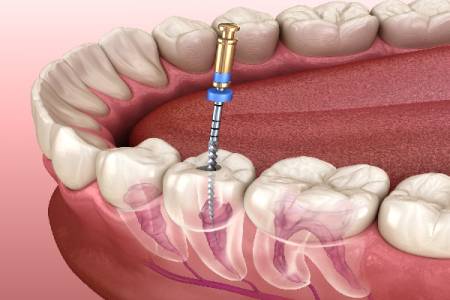
Root Canal Treatment involves carefully removing the infected or inflamed pulp, thoroughly cleaning and disinfecting the inside of the tooth's root canals, and then filling and sealing the space to prevent future infection. The tooth is then typically restored with a dental crown to protect it and restore its full function.
When Do You Need Root Canal Treatment? (Indications & Symptoms)
You might be a candidate for Root Canal Treatment if you experience any of the following symptoms:
- Persistent Tooth Pain: Moderate to severe pain, especially when chewing or applying pressure, that doesn't subside.
- Sensitivity to Hot and Cold: Lingering sensitivity to hot or cold temperatures, even after the source is removed.
- Swelling and Tenderness: Swelling and tenderness in the gums surrounding the affected tooth.
- Pimple-Like Bump on Gums: A small, pimple-like bump (fistula) on the gums that may periodically release pus.
- Tooth Discoloration: Darkening or discoloration of the tooth.
- Deep Decay or Trauma: Diagnosed deep decay reaching the pulp, or a tooth injury that has damaged the pulp.
Key Benefits of Root Canal Treatment
- Pain Relief: Effectively eliminates the source of your severe toothache and discomfort.
- Tooth Preservation: Saves your natural tooth, avoiding the need for extraction and the subsequent complications of tooth loss.
- Prevents Spread of Infection: Stops bacteria from spreading to other teeth, gums, and potentially into your jawbone or bloodstream.
- Maintains Aesthetics: Keeps your natural smile intact, preventing gaps or shifts that can occur with tooth loss.
- Efficient Chewing: Restores full function to your tooth, allowing you to chew comfortably.
- Cost-Effective Long Term: Often more economical in the long run than extracting a tooth and replacing it with a bridge or dental implant.
- High Success Rate: With modern techniques, root canal treatment has a very high success rate, lasting for many years, often a lifetime.
The Root Canal Procedure (Simplified Steps)
While the idea of a root canal might seem intimidating, modern techniques make it a comfortable and highly effective procedure:
- Diagnosis & Anesthesia: Your dentist will take X-rays and conduct tests to confirm the need for RCT. Local anesthetic is administered to thoroughly numb the affected area, ensuring you feel no pain during the procedure.
- Access Opening: A small opening is created in the crown of the tooth to gain access to the pulp chamber and root canals.
- Pulp Removal & Cleaning: The infected or inflamed pulp is carefully removed from the pulp chamber and root canals. Specialized instruments are used to meticulously clean and shape the canals.
- Disinfection: The root canals are thoroughly irrigated with antimicrobial solutions to eliminate bacteria and debris.
- Filling & Sealing: Once clean and dry, the canals are filled with a biocompatible material, typically a rubber-like compound called gutta-percha, and sealed with an adhesive cement to prevent re-infection.
- Restoration: A temporary filling is placed in the access opening. In a subsequent appointment (or sometimes on the same day), a permanent restoration, usually a dental crown, is placed over the treated tooth to protect it from fracture and restore its full strength and appearance.
Post-Treatment Care
- Avoid Chewing: Refrain from chewing on the treated tooth until the final restoration (like a crown) is placed.
- Oral Hygiene: Continue with excellent oral hygiene practices: brushing, flossing, and regular dental check-ups.
- Report Concerns: Contact your dentist immediately if you experience persistent pain, swelling, or notice any issues with your temporary or permanent restoration.
Frequently Asked Questions (FAQ)
- Is Root Canal Treatment painful? Contrary to popular myth, modern root canal treatment is designed to relieve pain, not cause it. With advanced local anesthesia and precise techniques, the procedure is typically no more uncomfortable than having a deep filling. Most patients experience significant relief once the infection is cleared.
- How long does a treated tooth last? With proper care, a good final restoration (like a crown), and regular dental check-ups, a tooth treated with a root canal can last a lifetime.
- How many appointments does it take? Most root canal treatments can be completed in one to two appointments, depending on the complexity of the case, the number of canals, and the extent of the infection.
- Will I need a crown after a root canal? In most cases, yes. After the root canal, the tooth can become more brittle and susceptible to fracture. A dental crown is highly recommended to protect the treated tooth from biting forces, restore its full function, and ensure its long-term success.
Take the First Step Towards a Pain-Free Smile
Don't let tooth pain dictate your life or compromise your oral health. If you're experiencing symptoms of an infected or damaged tooth, Root Canal Treatment offers a reliable and effective solution to save your natural tooth and eliminate discomfort.
Contact us today to schedule a consultation and discuss if Root Canal Treatment is the right solution for you. Let our expert team help you restore your oral health and bring comfort back to your smile.