Description
Here's a detailed product description for Wisdom Tooth Removal in Markdown format:
Wisdom Tooth Removal: Your Path to Lasting Oral Comfort
Are you experiencing discomfort, pain, or swelling at the back of your jaw? Trouble with chewing or persistent bad breath? These could be signs that your wisdom teeth are causing problems. Wisdom tooth removal is a common, often necessary dental procedure designed to alleviate pain, prevent future complications, and protect your overall oral health.
Understanding Wisdom Teeth
- The Third Molars: Wisdom teeth are the final set of molars to erupt, typically appearing between the ages of 17 and 25.
- Evolutionary Remnants: While our ancestors needed these extra molars for a coarser diet, modern human jaws often lack the space to accommodate them properly.
Why Wisdom Teeth May Need Removal
Even if currently asymptomatic, wisdom teeth can pose significant risks. Their removal is often recommended for the following reasons:
- Impaction: The most common reason for removal. A wisdom tooth is "impacted" when it doesn't have enough room to erupt properly and gets trapped beneath the gum line or against an adjacent tooth. Impaction can be partial (partially erupted) or full (completely buried).
- Pain and Discomfort: Impacted or erupting wisdom teeth can cause persistent pain, tenderness, and pressure in the jaw and surrounding areas.
- Infection (Pericoronitis): When a wisdom tooth only partially emerges, it creates a flap of gum tissue (operculum) that can trap food particles and bacteria. This leads to inflammation, swelling, and painful infection.
- Damage to Adjacent Teeth: An impacted wisdom tooth can push against the second molar, leading to potential damage, root resorption, increased risk of decay, or gum disease around that tooth.
- Cysts and Tumors: In rare cases, a fluid-filled sac (cyst) or even a benign tumor can develop around an impacted wisdom tooth, potentially damaging the jawbone and surrounding structures.
- Orthodontic Concerns: In some cases, erupting wisdom teeth can exert pressure that contributes to crowding or misalignment of other teeth, potentially undoing previous orthodontic work.
- Difficulty Cleaning: Even fully erupted wisdom teeth can be hard to reach and clean effectively, making them highly susceptible to cavities and gum disease.
The Wisdom Tooth Removal Process: What to Expect
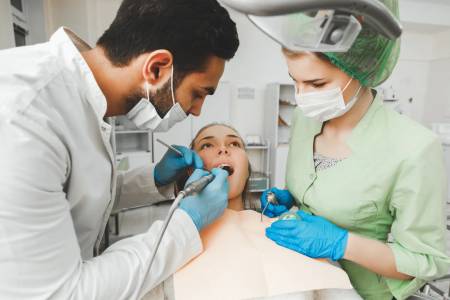
Our priority is your comfort and safety throughout the entire procedure.
1. Comprehensive Consultation & Diagnosis
- Detailed Examination: We begin with a thorough oral examination and discuss your symptoms and concerns.
- Digital X-rays: High-resolution X-rays (often including a panoramic or 3D cone-beam CT scan) are essential to assess the position of your wisdom teeth, their proximity to nerves and sinuses, and the amount of bone surrounding them. This helps us plan the most effective and safest extraction method.
- Personalized Treatment Plan: Based on the diagnosis, we'll explain the recommended procedure, discuss anesthesia options, and answer all your questions.
2. Anesthesia Options
We offer a range of anesthesia choices to ensure your comfort:
- Local Anesthesia: Numbing the area directly, allowing you to remain awake but pain-free.
- Sedation Dentistry (Oral/IV): For patients who prefer to be more relaxed or have anxiety, we offer oral sedatives or intravenous (IV) sedation, which induces a state of deep relaxation, often with little memory of the procedure.
- General Anesthesia: In some complex cases or for highly anxious patients, general anesthesia may be administered, putting you completely to sleep during the surgery. This is typically performed by a certified anesthesiologist.
3. The Extraction
- Simple Extraction: If the tooth is fully erupted and easily accessible, it can often be removed similarly to any other tooth.
- Surgical Extraction: For impacted teeth, a small incision may be made in the gum tissue, and a portion of the bone covering the tooth may be gently removed. The tooth might be sectioned into smaller pieces to facilitate removal with minimal impact on surrounding tissues.
- Closure: After the tooth is removed, the site is thoroughly cleaned, and sutures (stitches) are often used to close the gum tissue, promoting healing.
The Benefits of Wisdom Tooth Removal
- Immediate Pain Relief: Say goodbye to the throbbing and aching caused by problematic wisdom teeth.
- Prevention of Future Oral Health Issues: Avoid potential infections, decay, cysts, and damage to adjacent teeth.
- Improved Oral Hygiene: With the troublesome molars gone, it's easier to clean the back of your mouth, reducing the risk of gum disease and cavities.
- Protection of Adjacent Teeth: Safeguard the health and alignment of your second molars.
- Enhanced Overall Well-being: Enjoy peace of mind knowing you've taken proactive steps for a healthier mouth.
Your Recovery Journey: What to Anticipate
We provide detailed post-operative instructions, but here's a general overview of what to expect during recovery:
Immediate Aftercare (First 24-48 Hours)
- Bleeding: Expect some oozing or minor bleeding for the first 24 hours. Change gauze pads as directed.
- Swelling: Swelling is common and can be managed with ice packs applied to the outside of your cheek (20 minutes on, 20 minutes off). Swelling usually peaks 2-3 days after surgery.
- Pain Management: Take prescribed pain medication as directed. Over-the-counter pain relievers can also be used if appropriate.
- Diet: Stick to soft foods and liquids initially (yogurt, soup, mashed potatoes, smoothies). Gradually reintroduce solid foods as comfort allows.
- Oral Hygiene: Do NOT rinse vigorously or spit during the first 24 hours. After 24 hours, gentle salt water rinses can help keep the area clean. Avoid brushing the surgical site directly for a few days.
- Rest: Get plenty of rest. Avoid strenuous activity for at least 3-5 days.
Preventing Dry Socket
Dry socket (alveolar osteitis) is a painful complication where the blood clot dislodges from the extraction site. To prevent it:
- Avoid Smoking: Absolutely no smoking for at least 72 hours, preferably longer.
- Do Not Use Straws: The suction created can dislodge the blood clot.
- Avoid Spitting or Vigorous Rinsing: As mentioned above, avoid these actions, especially in the first 24-48 hours.
- Follow All Instructions: Adhere strictly to our post-operative care guidelines.
What to Avoid
- Strenuous physical activity
- Smoking and alcohol
- Hard, crunchy, or chewy foods
- Very hot liquids
- Touching the surgical site with your fingers or tongue
Most patients recover significantly within a week, though complete healing of the jawbone can take several weeks or months. We'll schedule follow-up appointments to monitor your healing process.
Why Choose [Your Clinic Name] for Your Wisdom Tooth Removal?
- Experienced & Compassionate Team: Our oral surgeons and dental professionals have extensive experience in wisdom tooth extractions, ensuring a high standard of care.
- State-of-the-Art Technology: We utilize advanced diagnostic tools and surgical techniques for precise and efficient procedures.
- Personalized Care Plans: Every patient is unique. We tailor treatment plans to your specific needs and comfort levels.
- Focus on Comfort & Safety: From gentle techniques to a range of anesthesia options, your comfort and safety are our top priorities.
- Transparent Communication: We believe in keeping you fully informed, answering all your questions, and guiding you through every step of the process.
Ready for Lasting Comfort?
Don't let troublesome wisdom teeth dictate your comfort and oral health. Take the first step towards a healthier, pain-free smile.
Contact us today at [Phone Number] or [Email Address] to schedule your comprehensive consultation!
Visit our website: [Your Website Link]
Disclaimer: This product description provides general information about wisdom tooth removal. It is not a substitute for professional medical advice, diagnosis, or treatment. Always seek the advice of a qualified dental professional or oral surgeon regarding any medical condition or before making any decisions about your health or treatment. Individual results and recovery times may vary.