Here's a detailed product description for an AHU Controller, formatted in Markdown:
[Product Name/Series]: Advanced AHU Controller for Optimal HVAC Performance
Elevate your building's comfort, air quality, and energy efficiency with the [Product Name] AHU Controller – the intelligent heart of your air handling unit.
In today's complex building environments, precise control over your Air Handling Units (AHUs) is paramount. The [Product Name] AHU Controller is engineered to deliver unparalleled accuracy, reliability, and energy savings, ensuring your indoor climate is always perfectly maintained while drastically reducing operational costs.
Key Features & Capabilities:
Precision Temperature & Humidity Control: Advanced PID control algorithms maintain desired setpoints with exceptional accuracy, ensuring consistent comfort and preventing over-conditioning.
Integrated VFD/Fan Control: Directly manages variable frequency drives (VFDs) for supply and return fans, optimizing airflow based on demand and achieving significant energy savings.
Optimized Airflow & Pressure Management: Intelligent control of dampers (fresh air, return, exhaust) and static pressure sensors to maintain proper ventilation, pressurization, and prevent cross-contamination.
Demand Control Ventilation (DCV): Integrates with CO2, VOC, and occupancy sensors to automatically adjust fresh air intake, ensuring optimal Indoor Air Quality (IAQ) and minimizing energy waste.
Energy Optimization Algorithms:
Free Cooling/Heating: Utilizes outdoor air conditions to cool or heat the building when favorable, reducing reliance on mechanical cooling/heating.
Optimal Start/Stop: Learns building thermal characteristics to pre-condition spaces efficiently before occupancy and shut down equipment strategically.
Enthalpy Control: Optimizes mixed air conditions for dehumidification and energy recovery.
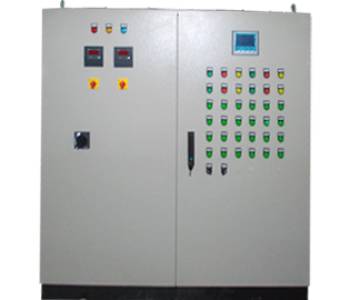
Comprehensive I/O Support: A robust array of universal inputs (temperature, humidity, pressure, current, voltage) and configurable outputs (analog 0-10V, 4-20mA; digital relays) for seamless connection to all AHU components.
Multi-Protocol Connectivity: Supports industry-standard communication protocols such as BACnet IP, BACnet MS/TP, and Modbus TCP/RTU, enabling effortless integration with any Building Management System (BMS) or Building Automation System (BAS).
Intuitive User Interface:
Local HMI: High-resolution LCD or touchscreen display for direct configuration, monitoring, and troubleshooting at the unit.
Web-based Interface: Secure, browser-accessible interface for remote monitoring, scheduling, alarming, and data analysis from any device.
Advanced Scheduling & Setpoints: Create flexible time-based, event-based, or occupancy-based schedules and adjust setpoints for different zones or periods.
Alarm Management & Notifications: Configurable alarm thresholds for critical parameters (e.g., high/low temperature, fan failure, filter status), with instant notifications via email, SMS, or BMS integration.
Historical Data Logging & Trending: Records operational data for analysis, performance verification, energy auditing, and predictive maintenance.
Robust & Reliable Hardware: Industrial-grade components designed for harsh environments, ensuring long-term durability and minimal maintenance.
Scalable & Modular Design: Flexible architecture to accommodate AHUs of varying sizes and complexities, from simple single-zone units to complex multi-zone systems.
Key Benefits:
Significant Energy Savings: Reduce HVAC energy consumption by up to 30% through optimized control strategies, VFD integration, and free cooling capabilities.
Enhanced Occupant Comfort & Productivity: Maintain ideal temperature, humidity, and fresh air levels for a healthier and more comfortable indoor environment.
Superior Indoor Air Quality (IAQ): Proactive management of CO2 and other pollutants ensures a continuous supply of clean, fresh air.
Reduced Operational & Maintenance Costs: Optimized equipment operation extends the lifespan of AHU components, minimizing wear and tear, and reducing emergency service calls.
Simplified Management & Troubleshooting: User-friendly interfaces and clear alarm diagnostics make system management intuitive for facility managers and technicians.
Seamless System Integration: Easily integrates with existing or new BMS/BAS platforms for centralized control and data exchange.
Compliance & Reporting: Comprehensive data logging supports energy audits, performance verification, and compliance with building standards.
Future-Proof Investment: Adaptable design and open protocols ensure compatibility with evolving building technologies.