Description
Root Canal Treatment (RCT): Save Your Smile, End Your Pain
Overview
Root Canal Treatment (RCT), also known as endodontic treatment, is a highly effective and common dental procedure designed to save a tooth that has become severely infected or inflamed. Instead of extracting a damaged tooth, RCT allows us to remove the diseased inner material (the dental pulp), clean and disinfect the root canals, and then seal them to prevent future infection.
Modern root canal treatments are virtually pain-free, thanks to advanced techniques and local anesthesia, and are primarily focused on relieving your existing pain and preserving your natural tooth for a lifetime.
Key Features & Benefits
- Pain Relief: Eliminates the source of severe toothache and discomfort caused by infection or inflammation.
- Tooth Preservation: Saves your natural tooth, preventing the need for extraction and maintaining your natural bite.
- Infection Elimination: Removes bacteria and infected pulp, preventing the spread of infection to other teeth or into your bloodstream.
- Restores Function: Allows you to chew and speak normally without pain, restoring full functionality to your mouth.
- Maintains Natural Appearance: Keeps your natural smile intact, avoiding gaps or the need for more extensive cosmetic procedures.
- Prevents Bone Loss: A missing tooth can lead to jawbone deterioration; preserving your tooth helps maintain bone structure.
- Long-Lasting Solution: With proper care and a final restoration (usually a crown), an RCT-treated tooth can last a lifetime.
- Comfort-Focused Procedure: Utilizes advanced anesthesia and modern techniques to ensure a comfortable and stress-free experience.
Who Needs Root Canal Treatment? (Indications)
You might need a root canal if you experience any of the following symptoms, which indicate that the dental pulp inside your tooth is infected or inflamed:
- Persistent Toothache: Moderate to severe pain that may come and go, or be constant.
- Sensitivity to Hot and Cold: Lingering sensitivity after consuming hot or cold foods/drinks.
- Swelling and Tenderness: Swelling in the gums around the affected tooth, or tenderness when touching the tooth or chewing.
- Pimple on the Gums: A small, pus-filled bump (abscess) on the gum near the painful tooth.
- Tooth Discoloration: Darkening of the tooth, indicating a dying pulp.
- Pain Upon Biting or Pressure: Discomfort when biting down or applying pressure to the tooth.
- (Sometimes) No Symptoms: In some cases, infection may be present without noticeable symptoms, detected only during a routine dental exam and X-rays.
The Root Canal Procedure: Step-by-Step
Our skilled dental team follows a meticulous process to ensure the highest success rate and patient comfort:
- Diagnosis & Anesthesia:
- We begin with a thorough examination, including X-rays, to accurately diagnose the extent of the infection.
- Local anesthesia is administered to numb the affected tooth and surrounding area, ensuring you feel no pain during the procedure.
- Access Opening:
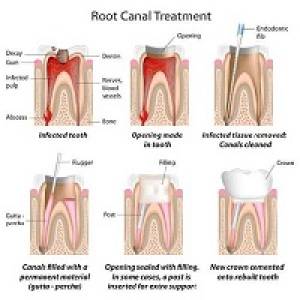
- A small opening is created through the crown of the tooth to access the pulp chamber and root canals.
- Cleaning & Shaping:
- Tiny, specialized instruments (files) are used to carefully remove the infected or inflamed pulp, bacteria, and debris from within the root canals.
- The canals are then shaped to prepare them for filling and sealing. The area is thoroughly irrigated with an antimicrobial solution to disinfect.
- Filling & Sealing:
- Once the canals are meticulously cleaned and dried, they are filled with a biocompatible material, typically a rubber-like compound called gutta-percha.
- An adhesive cement is used to seal the canals completely, preventing reinfection.
- Restoration:
- A temporary filling is placed to protect the tooth until the final restoration.
- In most cases, a dental crown is highly recommended and often necessary after a root canal. This permanent restoration provides crucial protection, reinforces the tooth's structure, and restores its full strength and aesthetics.
Post-Treatment Care & Expectations
- Immediate: It's normal to experience some mild sensitivity or tenderness in the treated area for a few days, especially when chewing. This can usually be managed with over-the-counter pain relievers.
- Avoid Chewing: While the tooth is healing and before the permanent crown is placed, avoid chewing directly on the treated tooth to prevent damage.
- Oral Hygiene: Continue your regular brushing and flossing routine to maintain optimal oral health.
- Follow-Up: A follow-up appointment will be scheduled to place your permanent crown or final restoration, which is vital for the long-term success and protection of your treated tooth.
- Longevity: With proper oral hygiene and regular dental check-ups, your root canal treated tooth can last for many years, often a lifetime.
Why Choose [Your Clinic Name] for Your RCT?
- Experienced Endodontic Team: Our dentists are highly skilled in advanced root canal techniques, ensuring precise and effective treatment.
- State-of-the-Art Technology: We utilize modern equipment, including digital X-rays, rotary endodontic instruments, and sometimes microscopes, for superior diagnostics and treatment outcomes.
- Patient-Centered Comfort: Your comfort is our priority. We offer gentle care, local anesthesia, and can discuss sedation options if you experience dental anxiety.
- Sterilization Excellence: We adhere to the highest standards of sterilization and infection control for your safety.
- Comprehensive Care: From initial diagnosis to the final restoration, we provide complete care, ensuring the longevity and health of your treated tooth.
- Transparent Communication: We believe in educating our patients. We will explain every step of the procedure, answer all your questions, and ensure you feel confident and informed.
Take Control of Your Dental Health!
Don't let tooth pain compromise your quality of life. Root Canal Treatment offers a reliable and comfortable solution to preserve your natural tooth, eliminate infection, and restore your healthy smile.
Schedule a consultation with [Your Clinic Name] today to discuss your symptoms and determine if Root Canal Treatment is the right solution for you.
Contact Us: [Your Clinic Name] [Your Clinic Address] [Your Clinic Phone Number] [Your Clinic Website]