Unit Auxiliary Panel-1 at NPH

      Description


      Here is a detailed product description for Unit Auxiliary Panel-1 (UAP-1) at NPH, formatted in Markdown.

      Unit Auxiliary Panel-1 (UAP-1) at NPH

      Overview

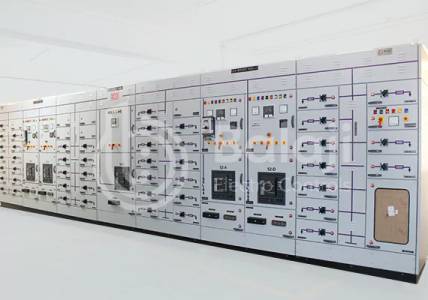
      The Unit Auxiliary Panel-1 (UAP-1) is a critical electrical distribution and control panel specifically engineered for the auxiliary systems of Unit 1 at NPH (Nuclear Power Hydro/Heavy Water/Plant). Designed to ensure the reliable and continuous operation of essential support equipment, UAP-1 plays a pivotal role in maintaining the operational integrity, safety, and efficiency of the nuclear power generation unit. It serves as the central hub for the power supply, control, and protection of various pumps, fans, motors, and other vital auxiliary loads necessary for Unit 1's safe start-up, stable operation, and controlled shutdown.

      Key Features

      • Robust Enclosure Design:
        • Material: Constructed from high-grade, corrosion-resistant steel (e.g., SS316L or powder-coated CRCA) suitable for harsh industrial environments, including potential seismic zones.
        • IP Rating: Typically IP54 or higher, providing excellent protection against dust ingress and splashing water.
        • Structure: Free-standing, floor-mounted, modular design with segregated compartments for busbars, feeders, and control circuits to enhance safety and ease of maintenance.
      • High-Capacity Busbar System:
        • Material: Electrolytic grade copper busbars, silver-plated for enhanced conductivity and reduced contact resistance.
        • Rating: Sized for the total continuous and fault current requirements of Unit 1 auxiliaries, typically with high short-circuit withstand capabilities.
      • Advanced Circuit Breakers & Motor Control Centers (MCC):
        • Types: Utilizes a combination of Air Circuit Breakers (ACBs) for main incomers and large feeders, and Molded Case Circuit Breakers (MCCBs) for smaller distribution circuits.
        • Motor Starters: Integrated MCC sections with Direct-on-Line (DOL), Star-Delta, or Soft Starter configurations for various motor loads, ensuring smooth operation and reduced mechanical stress.
        • Protection: Equipped with thermal overload, short-circuit, and earth fault protection for all outgoing feeders.
      • Comprehensive Protection & Control Relays:
        • Digital Relays: Incorporates advanced microprocessor-based numerical relays for precise and selective protection of feeders, motors, and transformers.
        • Functions: Overcurrent, earth fault, under/over voltage, frequency, and differential protection where applicable.
        • Control Logic: Integrated control logic for interlocking, sequencing, and emergency shutdown procedures.
      • Integrated Metering & Monitoring:
        • Digital Multifunction Meters: Provides real-time measurement of voltage, current, frequency, power (active/reactive), power factor, and energy consumption for each feeder and the main bus.
        • Status Indication: LED indicators for breaker status (open/closed), trip conditions, and auxiliary equipment run/stop status.
        • Mimic Diagram: Optional integrated mimic diagram for quick visual understanding of the power distribution network.
      • Human-Machine Interface (HMI) & SCADA Integration:
        • Local HMI: Touchscreen HMI panel for local control, data display, alarm annunciation, and parameter configuration.
        • Communication: Equipped with standard industrial communication protocols (e.g., Modbus RTU/TCP, Profibus, Ethernet IP) for seamless integration with the plant's Distributed Control System (DCS) or Supervisory Control and Data Acquisition (SCADA) system.
      • Internal Lighting & Auxiliary Power:
        • LED Lighting: Internal LED lighting for ease of maintenance and inspection.
        • Socket Outlets: Convenient 1-phase and 3-phase auxiliary power outlets for maintenance tools.
      • Cable Entry & Termination:
        • Accessibility: Bottom or top entry for power and control cables, with ample space for easy termination.
        • Gland Plates: Removable gland plates with suitable cable glands to maintain IP integrity.

      Core Functions

      1. Power Distribution: Provides reliable and regulated AC power to Unit 1 auxiliary loads, including cooling water pumps, lubrication oil pumps, ventilation fans, HVAC systems, lighting, and service power.
      2. Motor Control: Initiates, controls, and protects a multitude of electric motors vital for various operational processes within Unit 1.
      3. System Monitoring: Continuously monitors electrical parameters to detect anomalies, prevent overloads, and ensure stable power quality.
      4. Fault Protection: Rapidly isolates faulty circuits or equipment to prevent damage to the plant infrastructure, minimize downtime, and ensure personnel safety.
      5. Remote & Local Control: Enables operators to control auxiliary equipment both locally from the panel and remotely via the plant's central control room (DCS/SCADA).
      6. Interlocking & Sequencing: Executes pre-programmed interlocks and sequences to ensure safe operational procedures and prevent equipment damage.

      Technical Specifications (Illustrative - Specifics vary by Project)

      • System Voltage: 415V AC (or 3.3kV, 6.6kV depending on application), 3-phase, 3/4-wire
      • Control Voltage: 110V DC / 220V AC (configurable)
      • Frequency: 50 Hz / 60 Hz
      • Busbar Rating: Up to 4000A (main bus)
      • Short-Circuit Withstand Capacity: Up to 80kA for 1 second (or as per fault level study)
      • Ambient Temperature: 0°C to +50°C
      • Relative Humidity: Up to 95% non-condensing
      • Altitude: Up to 1000m (derating applies for higher altitudes)
      • Enclosure Dimensions (Typical): Varies based on configuration (e.g., 8000mm (W) x 2300mm (H) x 1200mm (D) for a multi-cubicle panel)
      • Mounting: Floor-standing
      • Seismic Qualification: Designed and tested to withstand specified seismic events, critical for nuclear applications.

      Safety & Compliance

      • Standards: Designed, manufactured, and tested in strict accordance with relevant international and national electrical safety and power distribution standards, including but not limited to:
        • IEC 61439 series (Low-voltage switchgear and controlgear assemblies)
        • IEC 60947 series (Low-voltage switchgear and controlgear)
        • IEEE Standards (e.g., C37.20.1 for Metal-Enclosed Low-Voltage Power Circuit Breaker Switchgear)
        • NFPA 70 (National Electrical Code)
        • Specific national nuclear regulatory requirements (e.g., AECB, NRC, AERB guidelines).
      • Personnel Safety: Incorporates safety features such as mechanical interlocks, arc-resistant design considerations, insulated busbar compartments, and clear labeling to ensure operator and maintenance personnel safety.
      • Quality Assurance: Undergoes rigorous factory acceptance tests (FAT) and site acceptance tests (SAT) as per NPH's stringent quality assurance protocols, including full functional testing, insulation resistance tests, and high-voltage tests.
      • Documentation: Supplied with comprehensive documentation, including detailed engineering drawings, operation and maintenance manuals, test reports, and component data sheets.

      Benefits for NPH

      • Enhanced Reliability: Ensures continuous power supply to critical auxiliary systems, directly contributing to the high availability and operational uptime of Unit 1.
      • Increased Safety: Robust protection schemes and safety interlocks safeguard personnel and plant equipment from electrical faults and operational errors, crucial for a nuclear facility.
      • Operational Efficiency: Facilitates efficient control and monitoring of auxiliary loads, optimizing energy consumption and supporting stable plant operation.
      • Reduced Downtime: Modular design and clear labeling aid in rapid fault diagnosis and maintenance, minimizing the duration of any required outages.
      • Regulatory Compliance: Meets the demanding regulatory requirements of the nuclear industry, ensuring long-term operational license adherence.
      • Longevity: Constructed with high-quality components and robust materials for a long service life, even in challenging plant environments.
      • Seamless Integration: Fully compatible with NPH's existing control and monitoring infrastructure, allowing for integrated plant management.
      PLC Panel

      Drive Panel

      APFC Panel

      Tags: Unit Auxiliary Panel-1 at NPH